THE BLOB PROJECT BLOB // SURVIVAL QUICK EXIT Emergency guidance ↗

QUICK EXIT // REAL-WORLD HELP

Pause. Check the danger. Get help.

Immediate danger? Contact your local emergency services when safe. In the UK call 999. Outside the UK, use your local emergency number.

  1. Follow instructions from emergency services for the actual incident.
  2. Do not delay an instructed evacuation to collect equipment.
  3. Use official alerts and local radio for current information. Do not approach an incident to investigate.

Read UK government emergency guidance ↗

This is a static guidance panel, not live alerts, a rescue service or a privacy escape. It does not clear browsing history.

Return to survival library ↓

THE MINISTRY OF CONTINUED EXISTENCE // RECEPTION

Command Centre

Six departments. One continuing administrative inconvenience.
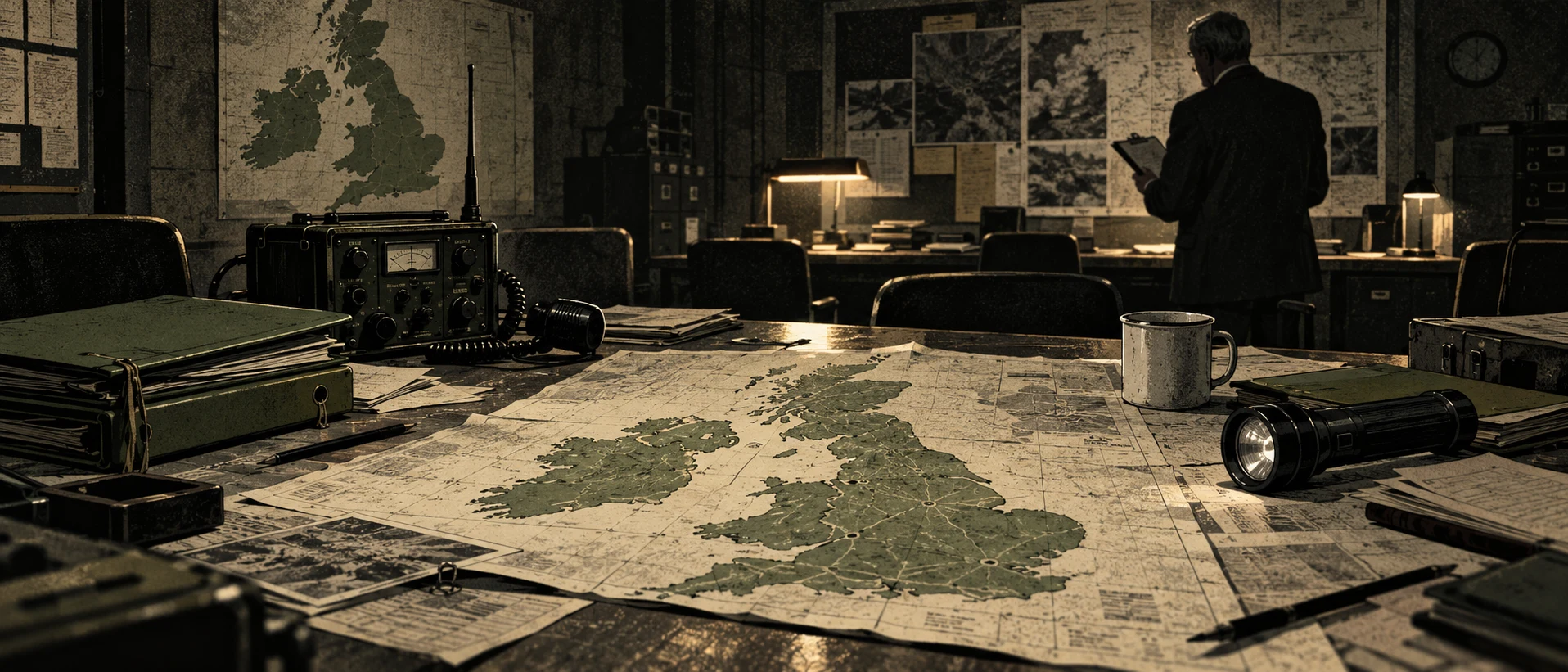
SIMULATION // SPECIAL EXERCISETHE SITUATION ROOM ↗A fictional UK-wide blackout. The kettle has declined to comment.

FIELD NOTES // V0.8 · THE MINISTRY OF CONTINUED EXISTENCE · PUBLIC ACCESS

The end of the world.
A little better organised.

Helping humanity remain mildly inconvenienced rather than entirely extinct.

Twelve field manuals. Four kits. One deeply tired official.

● STATIC LIBRARY / NO LIVE ALERTS

THE LAST CIVIL SERVANT: a weary, dishevelled fictional British official in a battered suit, holding a clipboard and wearing an old badge.
THE LAST CIVIL SERVANT
Acting Deputy Undersecretary for Carrying On.
Fictional character. Independent project; no government affiliation.

SIMULATION // FICTIONAL UK-WIDE BLACKOUT // NO LIVE INFORMATION

THE SITUATION ROOM

The nation is imaginary. The paperwork is regrettably convincing.

Illustrated fictional planning room with a UK map, analogue radio, torch and paperwork.
Illustrative tabletop exercise. Independent project; no government affiliation.

You coordinate an imaginary household support desk during a fictional blackout affecting England, Scotland, Wales and Northern Ireland. This is a story, not a forecast, national threat level or safety assessment. All reports and radio scripts are invented. Nothing advances until you choose.

Safe participation: Leave electricity, medical equipment, heating and refrigeration operating normally. No real-world tasks or calls are required. In a real emergency, stop this exercise and use QUICK EXIT above.

Open the eight-task blackout Mission ↗ · Visit the Simulator ↗ · Read the blackout field manual ↗

Real power cut guidance — separate from the fiction

Use a battery or wind-up torch. Keep fridge and freezer doors closed. Use a battery radio for information. Plan power-dependent medical care with your care team and equipment provider.

Report power cuts: England, Scotland and Wales: 105; Northern Ireland: 03457 643643. For a life-threatening emergency call 999 or 112.

Source: UK government Be Ready: power cuts. Checked 24 October 2026. Follow official instructions for your actual circumstances.

Missions

Enter THE SITUATION ROOM — fictional blackout exercise ↗

V0.9 // THE MINISTRY OF CONTINUED EXISTENCE

Survival Missions

Because natural selection shouldn't have to do all the work.
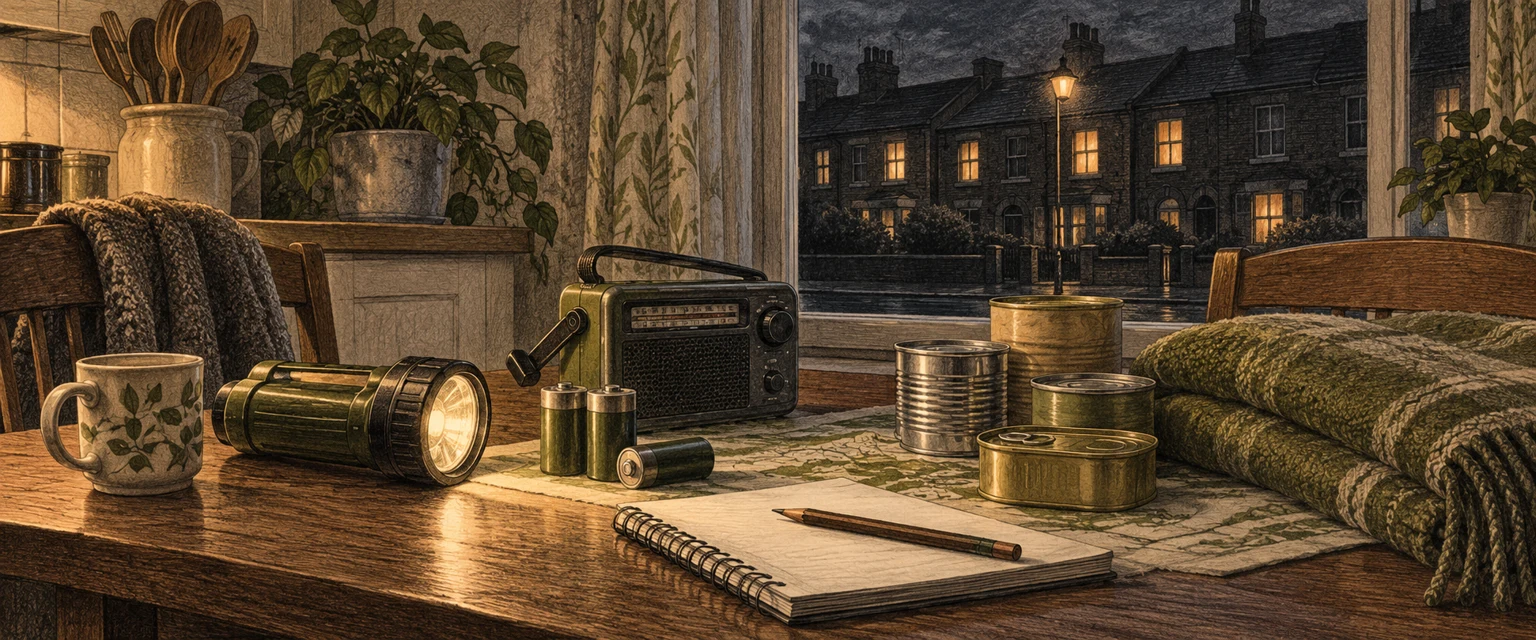
Mission 01: The UK 24-hour blackout

Scenes from an entirely fictional department. Practical guidance follows below.

A self-paced household planning exercise through an imagined day without mains electricity. Complete it in one sitting or revisit each stage. No countdown, power disconnection or actual deprivation is required. Adapt tasks to your access needs and budget; assistance counts.

Tick only tasks you have completed or responsibly planned with assistance. An unchecked task is useful information, not a failure. No personal details are entered or sent.

Before the exercise / light

Find and test a battery or wind-up torch in normal lighting. Check spare batteries and put it somewhere accessible.

Hour 0 / information

Write down power-cut reporting numbers: 105 in England, Scotland and Wales; 03457 643643 in Northern Ireland. Do not make a practice call.

Hour 1 / people

Discuss a backup plan for medical equipment, medicines, telecare and anyone who needs support with the relevant care or equipment provider. Record any unresolved needs on your own paper plan.

Hours 2–4 / food

Plan a day of suitable ready-to-eat food and drinking water. Keep fridge and freezer doors closed during a real outage; use the linked food-safety guidance before deciding what to keep.

Hours 4–8 / warmth

Locate warm layers and blankets. Never use a camping stove, barbecue, lit charcoal or generator indoors or in an enclosed space.

Hours 8–12 / communications

Check a battery or wind-up radio and a charged power bank if available. Note a radio station on paper. Plan how to reconnect if phone or internet service fails.

Hours 12–20 / support

Agree a safe way to check on a neighbour or household member, with their consent. Ask about Priority Services support if relevant; it does not guarantee continuous power.

Hour 24 / review

Write down one gap and your next practical action. Review food safety and care needs if an outage continues. Twenty-four hours is not a forecast or an all-clear.

Practical guidance: UK government power-cut guidance; National Grid preparation; Food Standards Agency food safety; Fire service power-cut safety. Reviewed 23 October 2026. Stage timings are editorial planning prompts.

Short skill challenges / five useful minutes

Optional practice. These do not affect your badge eligibility.

  1. Find your torch in normal lighting and show someone else where it lives. Do not create a trip hazard.
  2. Write a reconnection plan on paper: a contact, an accessible meeting place and a backup if mobile service fails. Keep personal information on your paper copy.
  3. Find a meal you can safely eat without cooking and check its label, suitability and opener. Do not switch off the fridge to practise.

Achievements

FICTIONAL DEPARTMENT // SELF-REPORTED AWARDS

Achievement Department

No government endorsement. No survival predictions. No lanyard included.

CERTIFIED TORCH OWNER

Complete the mission's torch task. “Certified” is a joke; no inspection or qualification is provided.

Pending / requires JavaScript

BASICALLY COMPETENT

Complete all eight blackout mission tasks and file completion.

Pending / requires JavaScript

NOT EATEN. YET.

Finish the fictional zombie simulator with every choice marked constructive. Recovery does not erase an earlier flagged choice.

Pending / requires JavaScript

FICTIONAL PERSONNEL OFFICE

The Last Civil Servant's Office

Mock promotions follow the number of currently earned departmental badges. They confer absolutely no authority. Particularly over the kettle.

Visitor awaiting a clipboard. Enable JavaScript for your fictional appointment.

Personnel regulations
  1. No badges: Visitor Awaiting a Clipboard.
  2. One badge: Temporary Assistant Torch Bearer.
  3. Two badges: Acting Deputy for Quiet Competence.
  4. Three badges: Undersecretary for Continued Existence (Unpaid).

Unticking a mission task withdraws mission completion. Restarting the mission clears its tasks and its two badges; the fictional zombie award remains until all choices are cleared.

FICTIONAL DAILY DEPARTMENTAL BRIEFINGS // NO LIVE INFORMATION

Today's departmental briefing

Satire from a fixed collection. The selected circular changes with your device's local calendar date when you open this page. It is not a news feed or emergency alert.

The Ministry confirms that the torch has been located. Its whereabouts were previously described as “somewhere sensible”. An inquiry has been avoided.
Read all fictional circulars
  • The Ministry confirms that the torch has been located. Its whereabouts were previously described as “somewhere sensible”. An inquiry has been avoided.
  • The Subcommittee for Biscuit Continuity has met. Quorum was achieved; biscuits were not. Minutes will be shorter than usual.
  • Your household plan has been received by the imaginary registry. Real-world implementation remains, inconveniently, your department.
  • A clipboard has been promoted to Acting Clipboard. Staff are asked to respect the revised chain of stationery.
  • The Department of Quiet Competence reports modest progress. No press conference is considered necessary.
  • Forms CE/24 are now available in triplicate. One copy for you, one for the filing cabinet, one to explain the first two.
  • The Last Civil Servant remains at his desk. His request for additional staff has been referred to himself.

Simulator

Enter THE SITUATION ROOM — fictional blackout exercise ↗

SIMULATION BUREAU // V0.9

Decisions. Consequences. A form at the end.

Practice only. No timer, live alerts or safety certification. Fictional personnel assessments are entertainment and do not measure real-world survival. Decisions remain while moving between departments; reloading or leaving the app clears them.

Departmental notice: initiative is permitted, provided it fits in the box.
Scenes from an entirely fictional department. Practical guidance follows below.

Field Manuals

Use the 24 / 72-hour sections to plan care and supplies. They are not forecasts, isolation rules or automatic all-clear times. Print the manuals before an outage; offline web access is not guaranteed.

CINEMATIC ILLUSTRATION · NOT INSTRUCTIONS01 // Real-world preparednessFlood Rising water, blocked routes and a safe departure.

Warnings and arrangements differ across the UK. The GOV.UK flood reference covers England and links to Scotland, Wales and Northern Ireland.
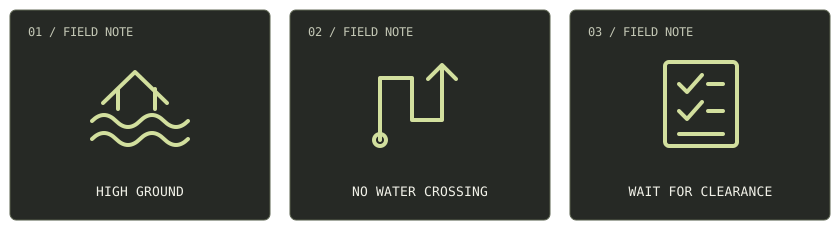
HIGH GROUND → NO WATER CROSSING → WAIT FOR CLEARANCE
Flood planning summary. Follow local evacuation instructions. Never walk, cycle or drive through floodwater. Wait for official clearance before returning. Diagram review: 23 October 2026; source links below. Read the written instructions and follow local official advice.

First actions / right now

  1. Move people and pets away from rising water; use a safe route to higher ground or upstairs if escape is blocked. Call 999 if life is at risk.
  2. Follow an evacuation instruction promptly. Do not walk, cycle or drive into floodwater; depth, current, drains and contamination may be hidden.
  3. Only isolate utilities if it is safe and you know how. Never touch electrical switches while standing in water.

Basis: GOV.UK · Before or during a flood · Cabinet Office · Be Ready household checklist · Editorial planning suggestions; see scope in references.

First 24 hours / stabilise

  1. Account for everyone at a safe meeting point. Tell a trusted contact where you are; ask your council about reception centres and accessible transport.
  2. Keep children and pets away from water and contaminated belongings. Use safe drinking water and follow the water supplier’s notices.
  3. Record damage only from a safe place. Contact your insurer before disposal or repairs; do not enter an unsafe building for photographs.

Basis: GOV.UK · Before or during a flood · Cabinet Office · Be Ready household checklist · Editorial planning suggestions; see scope in references.

Through 72 hours / sustain

  1. Arrange temporary accommodation and prescription access. Ask for help early if a carer, mobility aid or medical device is unavailable.
  2. Return only when responders say it is safe. Have affected electrics and heating assessed by qualified professionals before reuse.
  3. Treat cleanup as a separate recovery task: check local public-health advice, protect broken skin and avoid contact with sewage.

Basis: GOV.UK · Before or during a flood · Cabinet Office · Be Ready household checklist · Editorial planning suggestions; see scope in references.

Prepare / before you need it

  1. Before rain: identify two safe destinations and assistance for anyone who cannot use stairs.
  2. Check local flood warnings and practise a departure route without crossing low-lying roads.

Basis: GOV.UK · Before or during a flood · Cabinet Office · Be Ready household checklist · Editorial planning suggestions; see scope in references.

Equipment / plan additions

Use with the shared household checklist. Never delay escape to retrieve supplies.

Mistakes / avoid

  • Trying to save a vehicle as water rises.
  • Assuming familiar roads or bridges remain safe.
  • Switching wet electrical equipment back on.

References / scope

Source check: 23 October 2026. These are editorial summaries, not agency endorsements. Timelines are household planning prompts.
↑ All scenarios
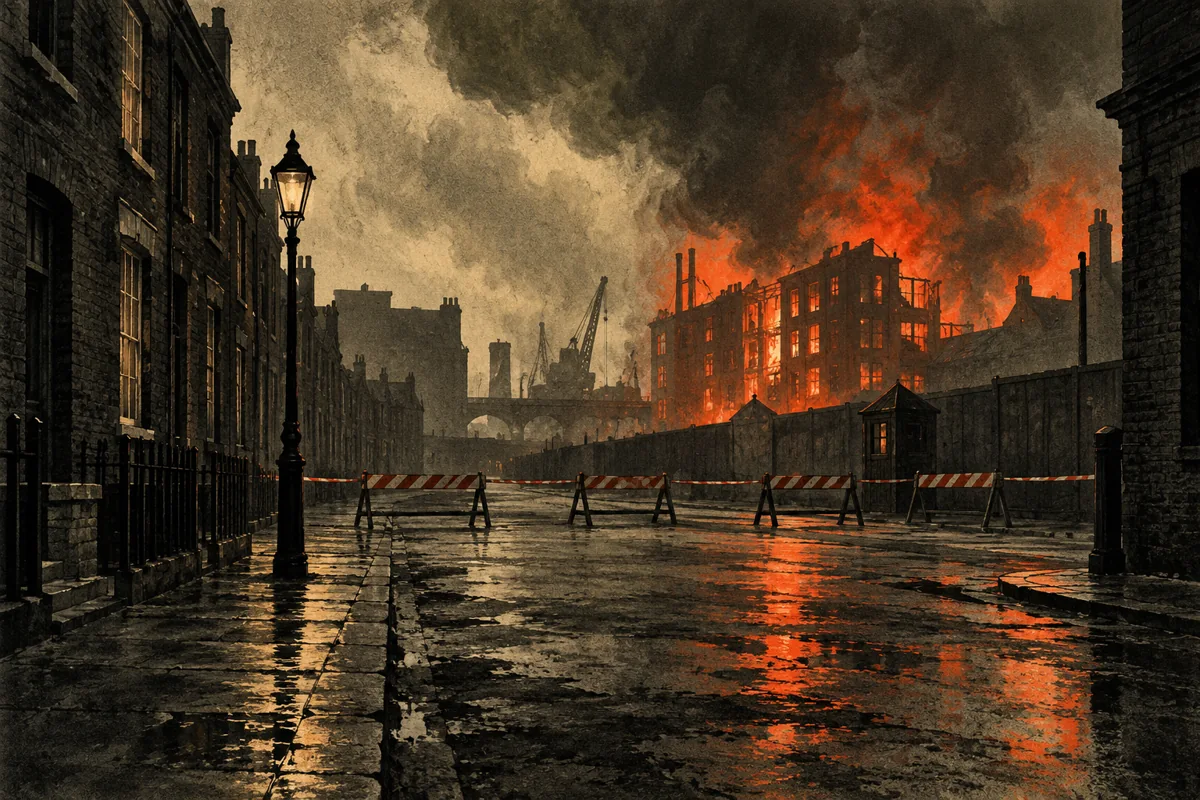
CINEMATIC ILLUSTRATION · NOT INSTRUCTIONS02 // Real-world preparednessFire Escape decisions for homes and shared buildings.

Know the actual evacuation strategy for your building. A fire in your own home, smoke affecting you, and a fire elsewhere in a purpose-built block can require different actions.
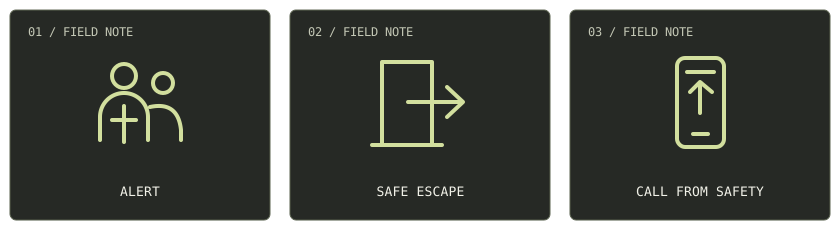
ALERT → SAFE ESCAPE → CALL FROM SAFETY
Fire in your home: alert others, use a safe escape route and call 999 from safety. Never re-enter. Blocks of flats may have a stay-put plan; read the building-specific conditions below. Diagram review: 23 October 2026; source links below. Read the written instructions and follow local official advice.

First actions / right now

  1. If fire is in your home, alert others and leave by a safe route. Leave belongings; close doors behind you if possible. Call 999 from safety.
  2. Do not use ordinary lifts or enter smoke-filled stairs. If trapped, close the door, call 999 with your exact location and follow the call handler’s advice.
  3. In a block with a stay-put plan, an unaffected flat may be safer than a smoky corridor. Leave if affected by smoke or fire, instructed by firefighters, or unsafe and the route is clear.

Basis: London Fire Brigade · Home escape plan · GOV.UK · Small blocks of flats: fire safety · Editorial planning suggestions; see scope in references.

First 24 hours / stabilise

  1. Stay at the agreed assembly point and tell firefighters who may still be inside. Never re-enter for a person, pet or possessions.
  2. Seek urgent medical help for breathing difficulties or smoke exposure; symptoms can worsen after leaving.
  3. Contact housing management, the council or insurer for accommodation. Explain mobility, sensory and care needs.

Basis: London Fire Brigade · Home escape plan · GOV.UK · Small blocks of flats: fire safety · Editorial planning suggestions; see scope in references.

Through 72 hours / sustain

  1. Do not return until authorised. Arrange essential medicines and replacements for assistive equipment.
  2. Ask a qualified professional to assess damaged wiring and appliances. Photograph damage only when access is safe.
  3. Review the escape plan with everyone; confirm any temporary building strategy with the responsible person.

Basis: London Fire Brigade · Home escape plan · GOV.UK · Small blocks of flats: fire safety · Editorial planning suggestions; see scope in references.

Prepare / before you need it

  1. Practise the normal route and an alternative. Keep corridors and fire doors clear.
  2. Agree assistance before an incident; never assume someone else has reported a fire.

Basis: London Fire Brigade · Home escape plan · GOV.UK · Small blocks of flats: fire safety · Editorial planning suggestions; see scope in references.

Equipment / plan additions

Use with the shared household checklist. Never delay escape to retrieve supplies.

Mistakes / avoid

  • Stopping to collect the emergency bag.
  • Treating every block of flats as having the same evacuation policy.
  • Fighting a fire instead of protecting your escape.

References / scope

Source check: 23 October 2026. These are editorial summaries, not agency endorsements. Timelines are household planning prompts.

  • London Fire Brigade · Home escape plan
    Houses and converted flats.https://www.london-fire.gov.uk/safety/the-home/escape-plan/escape-plan-houses-and-converted-flats/
  • GOV.UK · Small blocks of flats: fire safety
    Includes stay-put strategy; follow your building’s actual plan.https://www.gov.uk/government/publications/making-your-small-block-of-flats-safe-from-fire/a-guide-to-making-your-small-block-of-flats-safe-from-fire-accessible
↑ All scenarios
CINEMATIC ILLUSTRATION · NOT INSTRUCTIONS03 // Fictional exerciseZombie A fictional exercise in calm, humane coordination.

FICTION. Zombies are invented. This is a tabletop planning story, not a diagnosis, threat assessment or official emergency protocol. In reality, someone behaving unusually may need medical help.
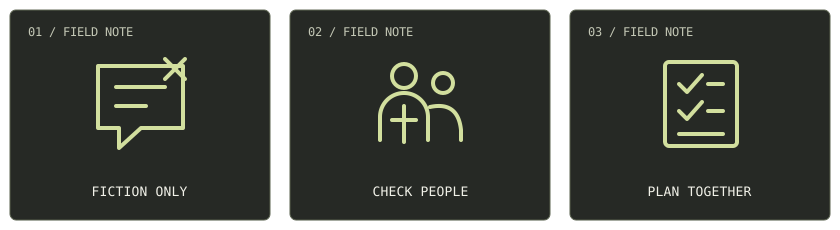
FICTION ONLY → CHECK PEOPLE → PLAN TOGETHER
Fictional tabletop exercise only. These are coordination prompts, not a real-world threat protocol. Use QUICK EXIT for an actual emergency. Diagram review: 23 October 2026; source links below. Read the written instructions and follow local official advice.

First actions / right now

  1. Pause the story if there is an actual danger. Use the emergency panel and describe observable facts to responders.
  2. For the exercise, identify a safe meeting place and account for participants without approaching a supposed threat.
  3. Keep the exercise non-contact. Do not carry weapons, restrain strangers or barricade public exits.

Basis: Cabinet Office · Be Ready household checklist · Editorial planning suggestions; see scope in references.

First 24 hours / stabilise

  1. Tabletop task: imagine phones are unavailable. Work out how separated household members would receive a reliable message.
  2. List essential care needs, including medicines, charging, food allergies, babies and pets. Identify who can help each person.
  3. Choose a trusted information lead. Label every invented update as fictional so it cannot circulate as a real alert.

Basis: Cabinet Office · Be Ready household checklist · Editorial planning suggestions; see scope in references.

Through 72 hours / sustain

  1. Rehearse a supply interruption using the shared checklist, within your normal budget. Do not stockpile at others’ expense.
  2. Check whether the meeting point is accessible after dark and whether a backup is needed. Discuss routes on a map rather than testing dangerous areas.
  3. Debrief: what depended on one phone, driver or carer? Assign one practical improvement to each household member.

Basis: Cabinet Office · Be Ready household checklist · Editorial planning suggestions; see scope in references.

Prepare / before you need it

  1. Set boundaries, a stop word and consent before the tabletop session.
  2. Turn story decisions into ordinary preparedness tasks; no fictional “infection control” rules apply to real people.

Basis: Cabinet Office · Be Ready household checklist · Editorial planning suggestions; see scope in references.

Equipment / plan additions

Use with the shared household checklist. Never delay escape to retrieve supplies.

Mistakes / avoid

  • Treating illness or disability as evidence of a fictional threat.
  • Sharing dramatic role-play messages without context.
  • Using weapons, traps or real pursuit during an exercise.

References / scope

Source check: 23 October 2026. These are editorial summaries, not agency endorsements. Timelines are household planning prompts.

↑ All scenarios
CINEMATIC ILLUSTRATION · NOT INSTRUCTIONS04 // Speculative exerciseAsteroid A speculative disruption drill grounded in verified information.

SPECULATIVE. NASA provides planetary-defence background, not the actions below. There is no universal impact shelter radius, countdown or guaranteed safe location in this guide. Incident-specific official directions must decide movement.
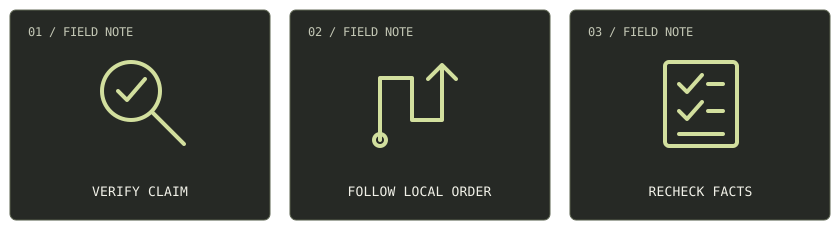
VERIFY CLAIM → FOLLOW LOCAL ORDER → RECHECK FACTS
Speculative planning exercise. Verify official information and follow the actual local instruction. No universal asteroid shelter or escape procedure is claimed. Diagram review: 23 October 2026; source links below. Read the written instructions and follow local official advice.

First actions / right now

  1. Verify any claim using official government communications and recognised scientific sources. Do not act on a viral trajectory map or screenshot alone.
  2. If officials issue a local evacuation or shelter instruction, follow it. Do not travel towards an alleged impact or observation site.
  3. If an actual blast, fire or falling debris is occurring, move away from windows and immediate hazards as safely as possible and contact emergency services for life-threatening danger.

Basis: NASA · Planetary defense · Cabinet Office · Be Ready household checklist · Editorial planning suggestions; see scope in references.

First 24 hours / stabilise

  1. Exercise task: assume transport and communications are disrupted. Account for household members and identify a safe contact method.
  2. Use the flood, fire, blackout or earthquake guide only for the real secondary hazard that is present. They do not predict impact effects.
  3. Keep roads available for responders and check the council’s information about shelter, welfare and accessible transport.

Basis: NASA · Planetary defense · Cabinet Office · Be Ready household checklist · Editorial planning suggestions; see scope in references.

Through 72 hours / sustain

  1. Reassess only against official updates. A quiet period or an elapsed 72 hours is not an all-clear.
  2. Plan continuity of medicines, care and accommodation if return is delayed. Record what is known separately from assumptions.
  3. Discuss financial and emotional support after a real disruption; avoid paying for “guaranteed” shelters or unverified protection products.

Basis: NASA · Planetary defense · Cabinet Office · Be Ready household checklist · Editorial planning suggestions; see scope in references.

Prepare / before you need it

  1. Use this as a decision-making exercise: who verifies information, who checks neighbours and who carries the contact list?
  2. Do not build a shelter or choose an evacuation route using this speculative story alone.

Basis: NASA · Planetary defense · Cabinet Office · Be Ready household checklist · Editorial planning suggestions; see scope in references.

Equipment / plan additions

Use with the shared household checklist. Never delay escape to retrieve supplies.

Mistakes / avoid

  • Inventing an exclusion zone from the object’s size.
  • Watching a predicted impact from a coast or hilltop.
  • Assuming an ordinary household kit can make every impact survivable.

References / scope

Source check: 23 October 2026. These are editorial summaries, not agency endorsements. Timelines are household planning prompts.

↑ All scenarios
CINEMATIC ILLUSTRATION · NOT INSTRUCTIONS05 // Real-world preparednessCivil unrest Avoid conflict and find a safe way away.

General personal-safety planning. Peaceful assembly is not the same as violence. The linked Run Hide Tell guidance applies specifically to a firearms or weapons attack.
STEP AWAY → SAFE ROUTE → CHECK IN
Planning summary for nearby violence. Move away only by a safe route, follow police directions and check in when safe. For a weapons attack use the separate Run Hide Tell guidance referenced below. Diagram review: 23 October 2026; source links below. Read the written instructions and follow local official advice.

First actions / right now

  1. If violence develops nearby, leave by a clear route away from confrontation. Do not approach to film or argue.
  2. If leaving would put you in immediate danger, move to a safer place and follow police directions. Keep exits available.
  3. Call 999 for immediate danger when safe. For a weapons attack specifically: escape if safe; otherwise hide, silence the phone including vibration, and tell police when safe.

Basis: Counter Terrorism Policing · Run Hide Tell · Cabinet Office · Be Ready household checklist · Editorial planning suggestions; see scope in references.

First 24 hours / stabilise

  1. Check transport and local police updates before a necessary journey. Tell someone your route and expected arrival.
  2. Account for companions without returning into a dangerous crowd. Choose a quiet, accessible reunion point outside the affected area.
  3. If displaced, ask the council about accommodation and welfare support. Share verified service information rather than names or rumours about participants.

Basis: Counter Terrorism Policing · Run Hide Tell · Cabinet Office · Be Ready household checklist · Editorial planning suggestions; see scope in references.

Through 72 hours / sustain

  1. Review whether work, school or care journeys need an alternative route. Follow reopening notices rather than assuming the area is clear.
  2. Document losses safely for an insurer. Keep original evidence private and follow police reporting advice.
  3. Check on people who are isolated or distressed, with their agreement. Ask for practical help if supplies or care visits are interrupted.

Basis: Counter Terrorism Policing · Run Hide Tell · Cabinet Office · Be Ready household checklist · Editorial planning suggestions; see scope in references.

Prepare / before you need it

  1. Agree how your group will separate and reunite safely before a large event.
  2. Know venue exits and transport options; follow steward and police safety instructions.

Basis: Counter Terrorism Policing · Run Hide Tell · Cabinet Office · Be Ready household checklist · Editorial planning suggestions; see scope in references.

Equipment / plan additions

Use with the shared household checklist. Never delay escape to retrieve supplies.

Mistakes / avoid

  • Going closer to record events.
  • Confronting people or carrying items as weapons.
  • Applying attack-specific tactics to every gathering.

References / scope

Source check: 23 October 2026. These are editorial summaries, not agency endorsements. Timelines are household planning prompts.

↑ All scenarios
CINEMATIC ILLUSTRATION · NOT INSTRUCTIONS06 // Real-world preparednessPandemic Protect health and keep essential care running.

This manual uses respiratory-infection guidance as an example. A future pandemic may spread differently. Follow pathogen-specific UKHSA, NHS and devolved public-health advice; this is not a treatment or isolation schedule.
CHECK ADVICE → REDUCE SPREAD → KEEP CARE GOING
Planning summary. Follow current public-health advice for the actual infection and your location. The respiratory guidance below does not apply to every pathogen. Diagram review: 23 October 2026; source links below. Read the written instructions and follow local official advice.

First actions / right now

  1. Check current public-health instructions for the actual infection and your UK nation. Do not infer the cause from symptoms alone.
  2. For a respiratory illness with fever or feeling too unwell for normal activities, try to remain at home and avoid contact, especially with people at higher risk.
  3. Seek clinical advice if worried or worsening. Call 999 for a life-threatening emergency such as severe breathing difficulty; do not wait for a test result.

Basis: UKHSA · Respiratory infection symptoms · NHS · Respiratory tract infections · Editorial planning suggestions; see scope in references.

First 24 hours / stabilise

  1. Arrange contact-free support for essentials if unwell. Tell care providers about symptoms so they can plan safe assistance.
  2. For respiratory infection, improve fresh airflow when safe, cover coughs, clean hands and reduce close contact. Do not prop fire doors open.
  3. Rest and drink fluids as appropriate for your health needs. Ask a pharmacist about symptom relief and medicine interactions; follow labels.

Basis: UKHSA · Respiratory infection symptoms · NHS · Respiratory tract infections · Editorial planning suggestions; see scope in references.

Through 72 hours / sustain

  1. Review symptoms and ask for medical advice if worsening or very unwell; people at higher risk should contact a clinician promptly.
  2. Check current vaccine, testing and treatment eligibility through the NHS. Do not use a fixed 72-hour deadline to decide you are no longer infectious.
  3. Keep normal prescribed care going through your healthcare team. Arrange a backup carer and a reliable medicine collection plan.

Basis: UKHSA · Respiratory infection symptoms · NHS · Respiratory tract infections · Editorial planning suggestions; see scope in references.

Prepare / before you need it

  1. Ask your care team how appointments and urgent medication access would continue during service disruption.
  2. Keep a symptom record to support clinical conversations; do not use it to self-diagnose a new pathogen.

Basis: UKHSA · Respiratory infection symptoms · NHS · Respiratory tract infections · Editorial planning suggestions; see scope in references.

Equipment / plan additions

Use with the shared household checklist. Never delay escape to retrieve supplies.

Mistakes / avoid

  • Taking antibiotics for a virus without a prescription.
  • Mixing remedies that contain the same medicine.
  • Assuming one pandemic’s isolation rules apply forever.

References / scope

Source check: 23 October 2026. These are editorial summaries, not agency endorsements. Timelines are household planning prompts.

↑ All scenarios
CINEMATIC ILLUSTRATION · NOT INSTRUCTIONS07 // Official guidance + speculative contextNuclear / radiation Official radiation precautions and clearly bounded speculation.

The practical advice here summarises UKHSA radiation-emergency guidance. A nuclear weapon scenario is speculative and may also involve unsurvivable blast or fire. This is not a weapon-effects model, blast shelter design or guarantee of protection.
GO IN → STAY IN → TUNE IN
For a radiation emergency affecting your area: go in, stay in and tune in to official instructions. Evacuate if directed. This is not a nuclear weapon survival diagram. Diagram review: 23 October 2026; source links below. Read the written instructions and follow local official advice.

First actions / right now

  1. For a radiation emergency affecting your area, follow the official message: go indoors, remain inside and monitor trusted broadcasts. Use the nearest building rather than travelling home.
  2. Shut external doors, windows and vents where possible; turn off fans and air conditioning as directed, except safety-critical ventilation. Stay away from external walls.
  3. Do not go outside to collect relatives from schools or care facilities. They will have their own instructions. Evacuate only if authorities direct it, unless your shelter has an immediate danger such as fire.

Basis: UKHSA · What to do in a radiation emergency · Editorial planning suggestions; see scope in references.

First 24 hours / stabilise

  1. Listen for location-specific changes and food or water restrictions. Radiation cannot be judged by smell, sight or how well you feel.
  2. If officials advise decontamination, follow the linked UKHSA instructions. Do not improvise chemical washes or take iodine products without official direction.
  3. Contact NHS services for essential medical needs rather than leaving shelter without advice. Explain that a radiation shelter instruction is in place.

Basis: UKHSA · What to do in a radiation emergency · Editorial planning suggestions; see scope in references.

Through 72 hours / sustain

  1. There is no automatic all-clear at 24 or 72 hours. Remain guided by the latest local instructions and any evacuation assistance.
  2. Plan care, sanitation and medicine needs with responders if sheltering continues. Record official messages and their time to avoid stale advice.
  3. Follow any restrictions on local produce, water or access. Do not attempt contamination testing or cleanup with household equipment.

Basis: UKHSA · What to do in a radiation emergency · Editorial planning suggestions; see scope in references.

Prepare / before you need it

  1. Before an incident, identify indoor locations and discuss communication with schools and carers.
  2. Review this scenario with a radiation-protection specialist before adding any weapon-specific instructions.

Basis: UKHSA · What to do in a radiation emergency · Editorial planning suggestions; see scope in references.

Equipment / plan additions

Use with the shared household checklist. Never delay escape to retrieve supplies.

Mistakes / avoid

  • Driving through the affected area to reach home.
  • Using iodine, salt or supplements as universal radiation protection.
  • Treating a mask or basement as protection against every nuclear effect.

References / scope

Source check: 23 October 2026. These are editorial summaries, not agency endorsements. Timelines are household planning prompts.

  • UKHSA · What to do in a radiation emergency
    Radiation incidents; not a nuclear weapon survival protocol.https://www.gov.uk/government/publications/radiation-emergencies-information-for-the-public/what-to-do-in-a-radiation-emergency
↑ All scenarios
CINEMATIC ILLUSTRATION · NOT INSTRUCTIONS08 // Real-world preparednessBlackout Light, warmth and care during a power outage.

A power failure can also interrupt heating, water, internet and phone service. Backup arrangements must be specific to any life-supporting equipment.
TORCH → CARE BACKUP → RADIO UPDATES
Power-cut planning summary. Use a torch, follow the agreed backup plan for medical equipment and monitor official information. No fuel-burning generator, barbecue or outdoor stove indoors. Diagram review: 23 October 2026; source links below. Read the written instructions and follow local official advice.

First actions / right now

  1. Use a torch. Check whether neighbouring buildings are affected without entering unsafe areas. Report to your network operator: 105 in Great Britain; 03457 643643 in Northern Ireland.
  2. If power-dependent medical equipment is at risk, use its agreed backup plan and contact the care provider. Call 999 for immediate life-threatening danger.
  3. Never run a generator, barbecue or outdoor fuel stove indoors or in a confined space. Keep away from fallen cables and report them.

Basis: Cabinet Office · Power cuts · London Fire Brigade · Carbon monoxide safety · Editorial planning suggestions; see scope in references.

First 24 hours / stabilise

  1. Conserve phone charge and listen to a battery radio. Keep fridge and freezer doors closed and follow food-safety advice before using affected food.
  2. Keep warm with layers and blankets, or seek a safe cool place in heat. Check neighbours only when the route is safe.
  3. Switch off non-essential appliances so they do not restart unattended. Keep a light on to show when power returns.

Basis: Cabinet Office · Power cuts · London Fire Brigade · Carbon monoxide safety · Editorial planning suggestions; see scope in references.

Through 72 hours / sustain

  1. Ask your council or supplier about welfare support if heating, water or communications remain unavailable.
  2. Keep medical supplies within their required storage conditions; ask a pharmacist if refrigeration has failed. Do not guess whether they remain usable.
  3. When power returns, check appliances cautiously and reset essential devices. Confirm telecare and medical alarms work; replenish batteries.

Basis: Cabinet Office · Power cuts · London Fire Brigade · Carbon monoxide safety · Editorial planning suggestions; see scope in references.

Prepare / before you need it

  1. Ask suppliers about Priority Services or Northern Ireland Customer Care Registers; registration does not guarantee uninterrupted power.
  2. Test backup arrangements with your device provider in advance. Keep the reporting number on paper.

Basis: Cabinet Office · Power cuts · London Fire Brigade · Carbon monoxide safety · Editorial planning suggestions; see scope in references.

Equipment / plan additions

Use with the shared household checklist. Never delay escape to retrieve supplies.

Mistakes / avoid

  • Using an oven to heat a room.
  • Connecting a generator to house wiring without a qualified installation.
  • Assuming a digital landline or telecare unit has backup power.

References / scope

Source check: 23 October 2026. These are editorial summaries, not agency endorsements. Timelines are household planning prompts.

↑ All scenarios
CINEMATIC ILLUSTRATION · NOT INSTRUCTIONS09 // Disruption planningCyber collapse Service disruption, account security and trusted recovery.

“Cyber collapse” is an editorial scenario, not an official forecast. Distinguish a local device problem, an account compromise and a wider service outage before acting.
VERIFY → SECURE → RECOVER
Account-recovery planning summary. Verify the provider, secure affected accounts and use its official recovery process. These symbols are not a technical recovery procedure. Diagram review: 23 October 2026; source links below. Read the written instructions and follow local official advice.

First actions / right now

  1. Check service status through a known official address or another trusted channel. Do not install a repair tool offered by an unsolicited message.
  2. If an account is compromised, use the provider’s recovery process from a device you trust. Secure the email account used for password resets.
  3. For suspicious financial activity, contact your bank using its known number. If essential medical or utility services fail, use the relevant care or outage plan.

Basis: NCSC · Recovering a hacked account · Cabinet Office · Power cuts · Editorial planning suggestions; see scope in references.

First 24 hours / stabilise

  1. For a hacked account: check forwarding rules, replace compromised or reused passwords, sign out other sessions and enable two-step verification.
  2. Keep evidence such as dates, messages and transaction references. Tell contacts through another channel if your account sent fraudulent messages.
  3. Use paper contacts and pre-arranged meeting plans if communications are down. Spend cash cautiously; do not disclose account recovery codes to helpers.

Basis: NCSC · Recovering a hacked account · Cabinet Office · Power cuts · Editorial planning suggestions; see scope in references.

Through 72 hours / sustain

  1. Apply provider-approved updates and review recovery details. Restore from trusted backups only once you understand the compromise.
  2. Review bank statements and other linked accounts. Follow the current NCSC route for reporting fraud, which differs in Scotland.
  3. If disruption is widespread, arrange care and household supplies through verified local support. A national outage cannot be solved by changing your home password.

Basis: NCSC · Recovering a hacked account · Cabinet Office · Power cuts · Editorial planning suggestions; see scope in references.

Prepare / before you need it

  1. Use unique passwords, two-step verification and backups in advance. Make sure another authorised person can access essential household information.
  2. Keep private recovery information out of this public checklist and shared printouts.

Basis: NCSC · Recovering a hacked account · Cabinet Office · Power cuts · Editorial planning suggestions; see scope in references.

Equipment / plan additions

Use with the shared household checklist. Never delay escape to retrieve supplies.

Mistakes / avoid

  • Clicking a “refund” or “security reset” link in a surprise message.
  • Sharing one-time codes or paying an unsolicited recovery agent.
  • Wiping devices before preserving evidence or consulting support.

References / scope

Source check: 23 October 2026. These are editorial summaries, not agency endorsements. Timelines are household planning prompts.

↑ All scenarios
CINEMATIC ILLUSTRATION · NOT INSTRUCTIONS10 // Real-world preparednessExtreme weather Separate plans for wind, lightning, heat and cold.

Check the exact hazard, timing and area in current Met Office warnings. Wind shelter, flood escape and heat precautions are not interchangeable.
IDENTIFY HAZARD → SAFE SHELTER → CHECK PEOPLE
Identify the actual weather hazard and follow its specific official advice. Shelter choices differ for wind, lightning, heat and flood. Read the separate conditions below. Diagram review: 23 October 2026; source links below. Read the written instructions and follow local official advice.

First actions / right now

  1. In strong wind, stay indoors if safe and delay non-essential travel. Keep clear of trees, damaged walls and fallen cables; do not attempt outdoor repairs mid-storm.
  2. For thunder, seek a substantial building or enclosed hard-top vehicle if safely reachable. Avoid exposed ground and water; do not shelter under an isolated tree.
  3. For suspected heatstroke, call 999 and begin cooling. Confusion, seizures, loss of consciousness or remaining unwell after 30 minutes of cooling are emergency signs.

Basis: Met Office · Stay safe in a storm · Met Office · Thunder and lightning · NHS · Heat exhaustion and heatstroke · London Fire Brigade · Carbon monoxide safety · Editorial planning suggestions; see scope in references.

First 24 hours / stabilise

  1. Heat: move to a cool place, remove unnecessary clothing and cool skin. Offer water only if the person is alert and can swallow; stay with them.
  2. Cold or snow: arrange warm layers, a safe heated place and a check-in for people who need assistance. Avoid unnecessary journeys on unsafe routes.
  3. After wind, keep clear of weakened structures. Check local flood and transport notices before travelling; use the flood guide for rising water.

Basis: Met Office · Stay safe in a storm · Met Office · Thunder and lightning · NHS · Heat exhaustion and heatstroke · London Fire Brigade · Carbon monoxide safety · Editorial planning suggestions; see scope in references.

Through 72 hours / sustain

  1. Check care visits, medicines and safe accommodation if a home is too hot, cold or damaged. Ask for help rather than using unsafe heating.
  2. Reassess food and medicine storage after outages. Do not use a barbecue or generator inside for warmth or cooking.
  3. Arrange repairs only when conditions allow safe access. Keep photos and receipts for insurers and update your household weather plan.

Basis: Met Office · Stay safe in a storm · Met Office · Thunder and lightning · NHS · Heat exhaustion and heatstroke · London Fire Brigade · Carbon monoxide safety · Editorial planning suggestions; see scope in references.

Prepare / before you need it

  1. Secure loose outdoor items before high winds arrive, while it is safe.
  2. Agree warm and cool destinations, including transport and assistance needs. Never use fuel-burning outdoor equipment indoors.

Basis: Met Office · Stay safe in a storm · Met Office · Thunder and lightning · NHS · Heat exhaustion and heatstroke · London Fire Brigade · Carbon monoxide safety · Editorial planning suggestions; see scope in references.

Equipment / plan additions

Use with the shared household checklist. Never delay escape to retrieve supplies.

Mistakes / avoid

  • Going outside during a storm to rescue garden furniture.
  • Choosing a flood-prone basement simply because it is indoors.
  • Waiting for someone with heatstroke to recover without emergency help.

References / scope

Source check: 23 October 2026. These are editorial summaries, not agency endorsements. Timelines are household planning prompts.

↑ All scenarios
CINEMATIC ILLUSTRATION · NOT INSTRUCTIONS11 // Real-world preparednessEarthquake Protect yourself during shaking, then assess safely.

Physical protective actions use USGS guidance because damaging earthquakes are uncommon in the UK. This is not a UK earthquake alert service. Follow local advice when abroad.
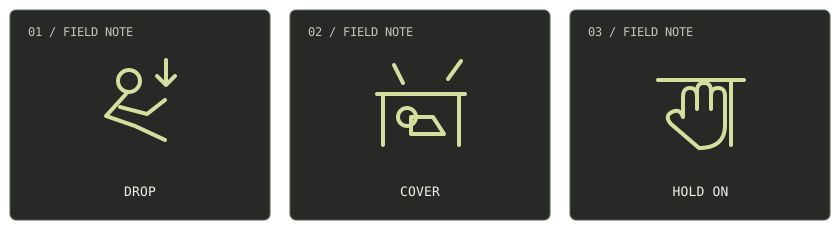
DROP → COVER → HOLD ON
Indoors during shaking: drop, cover and hold on under sturdy furniture where possible, protecting head and neck. Adapt for mobility needs; outdoor and driving advice differs. Read below. Diagram review: 23 October 2026; source links below. Read the written instructions and follow local official advice.

First actions / right now

  1. Indoors: drop, cover and hold on under sturdy furniture where possible. Protect your head and neck; keep away from windows and heavy objects. Do not rush down stairs during shaking.
  2. If unable to drop, stay seated, brace and protect your head and neck as best you can. For a wheelchair, lock wheels if possible.
  3. Outdoors: move into an open area away from buildings and overhead wires. Driving: pull over safely away from bridges, trees and cables; remain inside until shaking stops.

Basis: USGS · During an earthquake · Cabinet Office · Be Ready household checklist · Editorial planning suggestions; see scope in references.

First 24 hours / stabilise

  1. Expect aftershocks. Leave a damaged building carefully after shaking stops, keeping clear of falling debris; do not use lifts.
  2. Check injuries without entering unstable areas. Call emergency services for serious injury or trapped people; do not attempt structural rescue.
  3. Avoid damaged utilities, naked flames and switches if gas is suspected. At a coast, follow local tsunami evacuation advice and signs promptly.

Basis: USGS · During an earthquake · Cabinet Office · Be Ready household checklist · Editorial planning suggestions; see scope in references.

Through 72 hours / sustain

  1. Stay out of damaged buildings until cleared by competent authorities. Do not return for belongings during aftershocks.
  2. Contact housing, insurers and care providers for temporary accommodation and essential treatment. Keep routes clear for emergency traffic.
  3. Use official notices for transport, water and return decisions. Keep a record of reunification plans if phones are unreliable.

Basis: USGS · During an earthquake · Cabinet Office · Be Ready household checklist · Editorial planning suggestions; see scope in references.

Prepare / before you need it

  1. Secure heavy furniture and avoid storing heavy items above beds. Practise protection with household members.
  2. If travelling, learn the local warning system, emergency number and coastal evacuation route before an incident.

Basis: USGS · During an earthquake · Cabinet Office · Be Ready household checklist · Editorial planning suggestions; see scope in references.

Equipment / plan additions

Use with the shared household checklist. Never delay escape to retrieve supplies.

Mistakes / avoid

  • Running outside beneath falling glass during shaking.
  • Assuming a doorway is always the safest place.
  • Re-entering a cracked building without clearance.

References / scope

Source check: 23 October 2026. These are editorial summaries, not agency endorsements. Timelines are household planning prompts.

↑ All scenarios
CINEMATIC ILLUSTRATION · NOT INSTRUCTIONS12 // Fictional exerciseAlien invasion A fictional misinformation and communication drill.

FICTION. This guide makes no claim of an alien threat. No official alien-invasion protocol is implied. Use ordinary emergency guidance for any real fire, injury or service interruption.
FICTION ONLY → VERIFY MESSAGE → CALM CHECK-IN
Fictional tabletop exercise only. Verify information and coordinate calmly. Do not approach real aircraft, debris or restricted areas; use QUICK EXIT for actual hazards. Diagram review: 23 October 2026; source links below. Read the written instructions and follow local official advice.

First actions / right now

  1. For a real unusual event, move away from immediate hazards and describe what you can observe. Do not approach aircraft, debris or restricted areas.
  2. For the tabletop story, appoint a fact-checker and separate confirmed information, assumptions and invented prompts.
  3. Do not contact emergency services for role-play. Call them only for a real emergency; explain actual injuries or hazards rather than a fictional explanation.

Basis: Cabinet Office · Be Ready household checklist · NCSC · Recovering a hacked account · Editorial planning suggestions; see scope in references.

First 24 hours / stabilise

  1. Exercise task: compare two contradictory messages. Check the original issuer, publication time and location before choosing what to share.
  2. Choose a backup contact method and meeting point. Identify how someone without a smartphone or with a sensory impairment gets the same information.
  3. Plan normal food, water and medicine continuity if a communications outage is part of the story. No special “alien protection” equipment is needed.

Basis: Cabinet Office · Be Ready household checklist · NCSC · Recovering a hacked account · Editorial planning suggestions; see scope in references.

Through 72 hours / sustain

  1. Run a calm household debrief. List which decisions had evidence and which were guesses; replace guesses with a question for the appropriate real authority.
  2. Test whether documents and contacts can be found without internet access, using an agreed safe exercise.
  3. Stop if participants become distressed. The useful outcome is a better communication plan, not greater belief in the story.

Basis: Cabinet Office · Be Ready household checklist · NCSC · Recovering a hacked account · Editorial planning suggestions; see scope in references.

Prepare / before you need it

  1. Set a clear start and finish, consent and a stop word. Keep fictional messages inside the exercise group.
  2. Use the cyber guide for an actual hacked account, and the emergency panel for immediate danger.

Basis: Cabinet Office · Be Ready household checklist · NCSC · Recovering a hacked account · Editorial planning suggestions; see scope in references.

Equipment / plan additions

Use with the shared household checklist. Never delay escape to retrieve supplies.

Mistakes / avoid

  • Sharing fabricated official notices as if real.
  • Going to restricted sites to investigate lights or debris.
  • Buying unverified protective devices or treating strangers as hostile.

References / scope

Source check: 23 October 2026. These are editorial summaries, not agency endorsements. Timelines are household planning prompts.

↑ All scenarios

My Kit

SURVIVAL KIT // V0.4

Prepared. Without making it a personality.

Four practical checklists. Adapt quantities to your household, journey, needs and budget. Tick equipment only after checking it is present and usable. Exclude a whole kit from the review if it does not apply. Adapt the remaining checklist to your needs.

Do not delay an instructed evacuation to collect supplies. A 72-hour bag is a planning aid, not a guarantee of independence for three days. Follow local instructions. Vehicle and motorcycle kits do not replace maintenance, route planning or breakdown advice.
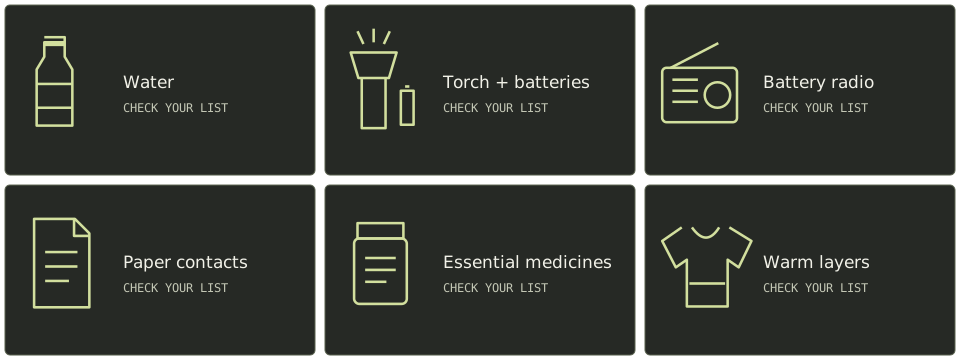
Equipment reference: bottled water, torch and batteries, battery radio, important documents, essential medication and warm layers.
Equipment reference · Examples only; use the checklists below for quantities, suitability and personal needs. Follow product and prescription instructions. Basis: UK government household checklist.

Home / the cupboard of quiet competence

A torch in a drawer beats a stirring speech in the dark.

72-hour grab bag

Portable essentials. The ornamental cast-iron casserole may remain at home.

Vehicle / the four-wheeled cupboard

Check the boot. Past-you may have packed three golf balls and optimism.

Motorcycle / luggage with opinions

Pack for the space you actually have. Physics remains deeply unhelpful.

UK government household preparedness checklist ↗

READINESS // AN HONEST INVENTORY

A plan beats a heroic shrug.

This review measures your checklist completion and planning answers. It cannot assess your safety, predict an incident or certify readiness. Scenario-specific manual ticks remain separate.

THE BLOB PROJECT // PUBLIC INFORMATION, PRIVATELY WORRIED

A modest administrative objection to the end of everything.

The fictional Last Civil Servant, still holding his clipboard.

Preparedness. With fewer speeches and more spare batteries.

INDEPENDENT ARTWORK · FICTIONAL OFFICIAL · NO GOVERNMENT ENDORSEMENT

DEPARTMENTAL CIRCULAR // PLEASE RETAIN YOUR COMMON SENSE

For when “a bit of a nuisance” develops a plot.

Keeping a small torch lit for common sense.

Because “we shall muddle through” is better with a plan.

THE BLOB PROJECT · INDEPENDENT PREPAREDNESS LIBRARY